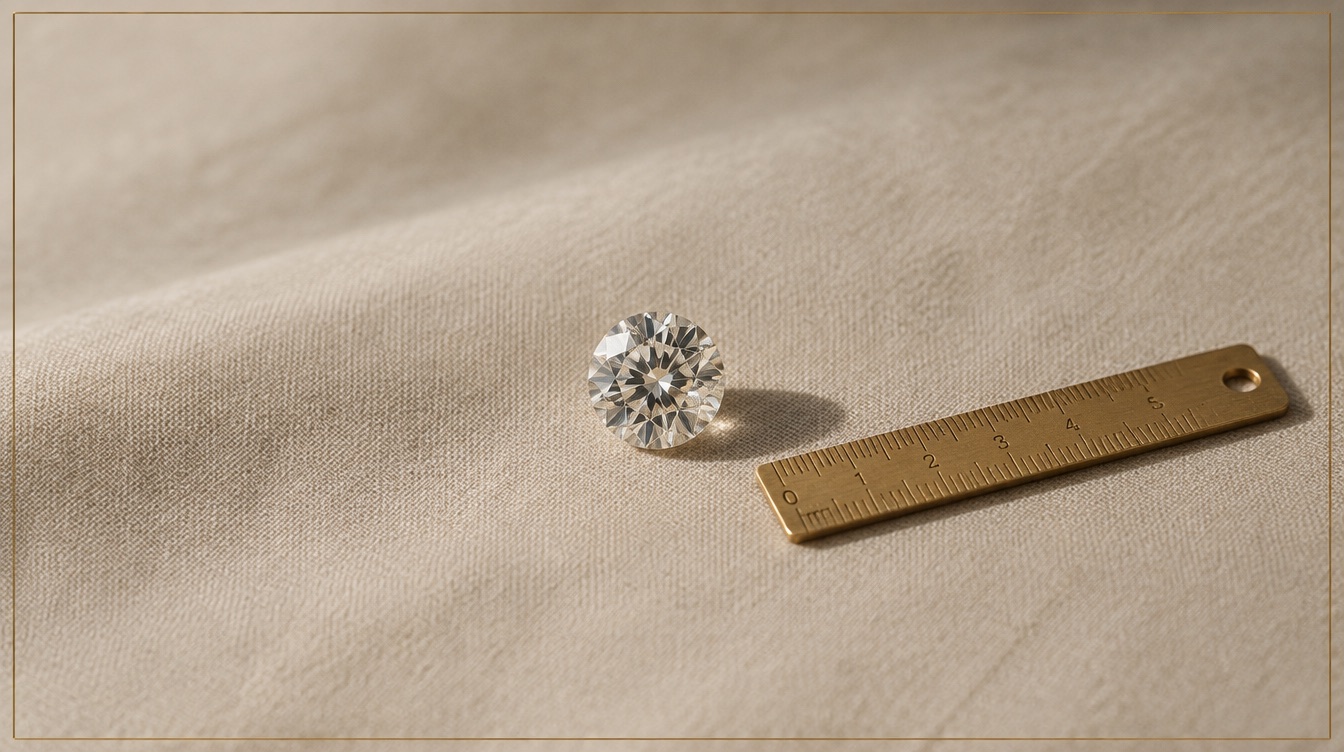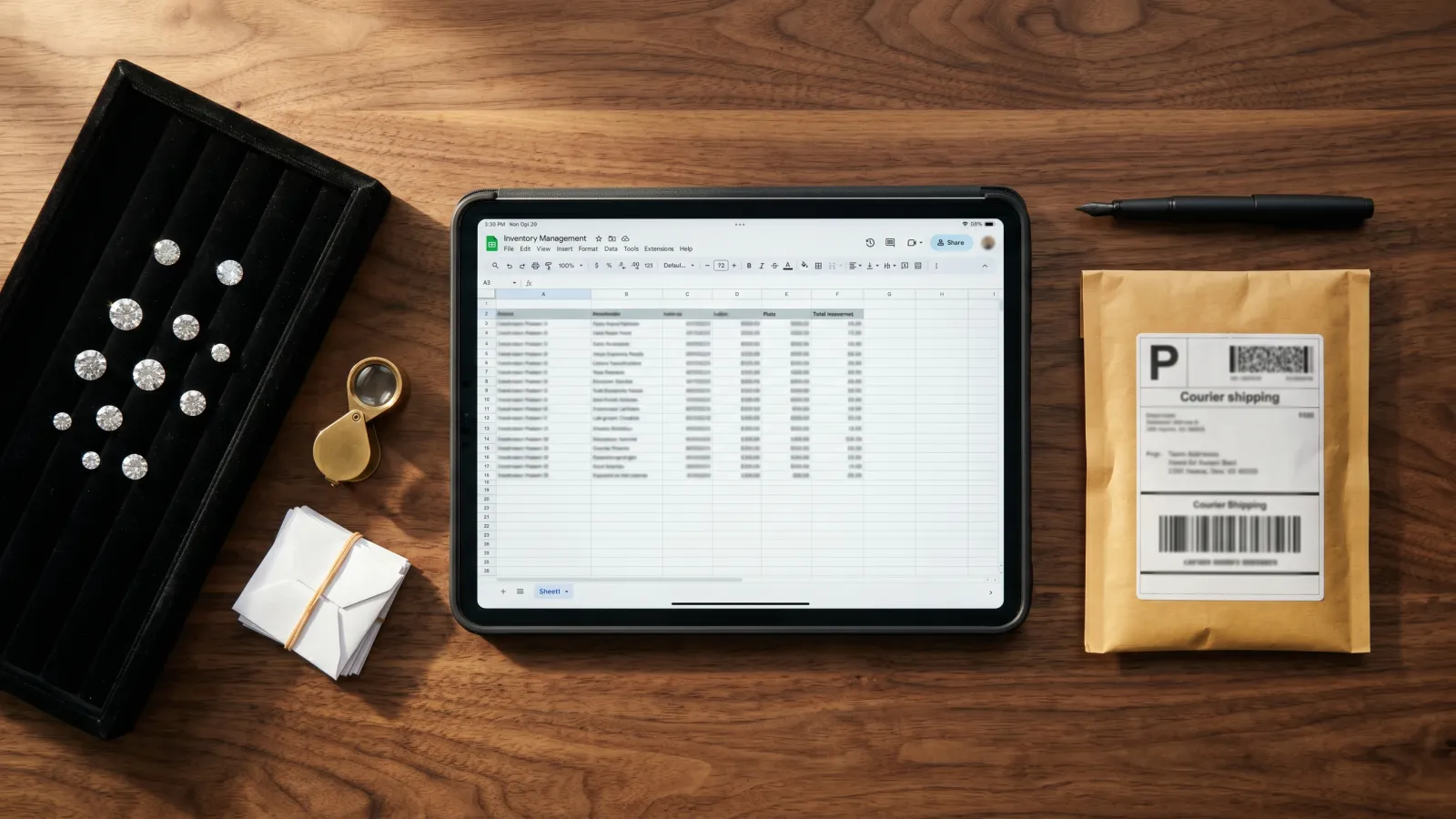
A lab-grown sale is not a failed natural sale, and a natural sale is not a missed lab-grown opportunity. They are two different products, bought for two different reasons, by two different customer types — and the jeweler who runs both cleanly grows total revenue instead of just shifting it from one register to the other.
A decade ago the choice was simple: carry natural diamonds, maybe dabble in lab-grown, and let customers self-select. Today the question has flipped. Lab-grown accounts for roughly 45% of US engagement ring purchases in 2026, natural diamonds are reclaiming their luxury positioning with better-funded marketing than they've had in years, and both categories are still growing. The question for an independent jeweler isn't whether to carry lab-grown alongside natural anymore. It's how to run both on the same floor, with the same staff, for the same walk-in traffic, without either one undercutting the other.
That's a merchandising problem, a pricing problem, a training problem, and — because both categories now sit in the same case under the same roof — a disclosure problem. This guide walks through each piece: why the two categories belong side by side, how to lay out the floor so neither cannibalizes the other, how to position each to the customer standing in front of you, what the FTC expects when you sell both under one roof, how to train staff to stay neutral, how to price and allocate margin across both lines, the questions customers actually ask when they're comparing the two in person, and a practical checklist for launching or cleaning up a mixed case.
Why Retailers Carry Both Natural and Lab-Grown Diamonds Side by Side
Three forces have made the old "pick one, dabble in the other" approach untenable for independent jewelry stores.
Customer Walk-Ins Now Expect Both
A customer walks in for an engagement ring having already seen lab-grown pricing on Instagram and heard about natural diamonds from their parents. They've researched both before they ever reach your counter. A floor that only stocks one category loses the other customer outright — and worse, it signals that the store hasn't kept up with a category the customer already takes seriously.
The Two Categories Serve Distinct Customer Needs
Segmentation is the real driver here, not indecision. Price-sensitive shoppers and size-maximizing shoppers gravitate to lab-grown because it lets them buy a visibly larger stone at the same budget. Heritage-minded and investment-minded shoppers gravitate to natural because rarity and long-term value retention are the point, not a drawback. Values-driven shoppers split between the two depending on which story — traceable sourcing or reduced environmental footprint — resonates more with them personally. Treating either category as a fallback for the other confuses all three groups at once.
Margin Diversification Protects the Store Through Cycles
This is the part retailers underweight. Natural and lab-grown diamond demand don't move on the same cycle — one softens seasonally, economically, or on a news cycle while the other holds steady, and a store carrying only one category rides that swing with no offset. The two lines also generate margin differently: natural margin comes from rarity, certification prestige, and slower, higher-ticket sales; lab-grown margin comes from faster turn and volume at a lower per-piece ticket. A store running both isn't just covering more customer types — it's blending two different margin profiles and two different inventory velocities into one P&L, which smooths revenue across the year in a way a single-track store structurally can't.
How to Merchandise Both Without One Cannibalizing the Other
Physical floor design does more to protect dual-track sales than any script a staff member memorizes. The most consistent pattern among independent stores running both categories well in 2026 is a three-tier layout.
Tier 1: The Signature Natural Diamond Case
Front and center, under the best lighting in the store. This is where the higher-carat naturals, rare colors, and the most certification-forward, design-intensive pieces live. Signage stays minimal but confident: "Natural Diamonds."
Tier 2: The Lab-Grown Case
Nearby, but physically separated, with equally clear signage: "Laboratory-Grown Diamonds." Same design-forward presentation and the same level of polish as Tier 1, organized instead around larger sizes at accessible price points — this is the case that sells on size, transparency, and design choice.
Tier 3: The Fashion and Fine Jewelry Mix
Both categories appear here — lab-grown pendants, natural eternity bands, stacking rings using either — with a category label on every individual tag. This is where undecided customers browse and discover without having to commit to one case or the other first.
The rule that makes the whole layout work: don't interleave lab-grown and natural in the same case. Part of the reason is regulatory — the FTC's disclosure rules get harder to satisfy cleanly when the two sit shoulder to shoulder and every tag has to do more work to distinguish itself. The larger reason is customer clarity. When the categories are separated, the customer knows exactly where they are standing without reading fine print on every piece.
Handling Hybrid Pieces
Some customers want both in one piece — a natural center stone with lab-grown side stones, for example, or a natural engagement ring paired with a lab-grown stacking band. These pieces belong in Tier 3, and the tag discipline that governs the separated cases still applies inside a single piece: every stone's category gets identified on the tag and on the sales ticket, not just the piece as a whole. Transparency about that labeling — for insurance purposes and for future resale — is what unlocks the hybrid sale. Hedging on which stone is which is what kills it. Framed well, a hybrid piece isn't a compromise; it's a customer getting the heritage of a natural center stone and the size or budget flexibility of lab-grown accents in the same ring.
Positioning Lab-Grown vs. Natural to Different Customer Types
Once a customer has self-selected past the floor layout, the conversation still needs to match how they think about the purchase. Three recurring customer types show up across dual-track stores, and each responds to a different opening.
| Customer Type | Budget-Conscious | Values-Driven | Traditional |
|---|---|---|---|
| Primary motivation | Maximum visible size and quality per dollar | Sourcing story — traceability or environmental footprint | Rarity, heritage, and long-term value retention |
| Category to lead with | Lab-grown, framed on price-to-size ratio | Either — depends which sourcing story matters more to them | Natural, framed on certification and provenance |
| Opening question | "What size and budget are you working with?" | "What matters more to you — traceable sourcing or a smaller footprint?" | "Is this a piece you want to pass down or hold value on?" |
| Language that resonates | Transparent pricing, current wholesale benchmarks, "same look, more stone" | Substantiated sustainability claims, sourcing specifics, no vague "eco" language | Certification prestige, craftsmanship, provenance where available |
| Objection to preempt | "Is this actually a real diamond?" — chemically identical, GIA/IGI certified either way | Greenwashing skepticism — only claim what you can document | "Isn't lab-grown just as good?" — reframe as different priorities, not a hierarchy |
The store's own marketing has to carry that same split, or the in-person positioning gets undercut before the customer walks in. Natural diamond marketing works best leaning on craftsmanship stories, individual stone provenance where it's available, and longer-form customer features. Lab-grown marketing works best leaning on size and design language, transparent pricing and sourcing, and style-forward photography, with sustainability claims included only where they can be substantiated. At the brand level, the store's overall voice should read as dual-track neutral rather than implicitly favoring one: a "heritage and tradition" brand voice still needs a visible, well-presented lab-grown offering, and a "modern and sustainable" brand voice still needs to stock and respect naturals.
FTC Disclosure Requirements When Selling Both Side by Side
Running two diamond categories under one roof raises the compliance bar, not just the merchandising bar. The FTC's Jewelry Guides require that any diamond not formed in the earth be clearly and conspicuously disclosed as such — "laboratory-grown," "laboratory-created," or a manufacturer-specific equivalent — every time the word "diamond" is used to describe it, in advertising, on signage, and on the sales ticket. The modifier has to sit immediately next to the word "diamond," not buried in fine print elsewhere on the tag. Used by itself, without a qualifier, "diamond" is understood to mean a natural, mined stone — which is exactly why interleaving the two categories in one case makes compliance harder: every tag has to carry that disclosure cleanly on its own, with no case-level signage doing the work for it.
Documentation discipline is the other half of this. Every invoice for a dual-track sale should specify: the category (laboratory-grown or natural), the certifying lab and certificate number, the full 4Cs (or the Premium/Standard designation on GIA-graded lab-grown), the growth method where applicable, and any treatment disclosure. Customers rely on that paperwork for insurance, for appraisals, for future resale, and for their own records — and sloppy paperwork at a dual-track store is the single most common source of customer-trust failures, more than any pricing or floor-layout mistake. Retailers should confirm current disclosure language directly against the FTC's published Jewelry Guides, since enforcement guidance has continued to sharpen since lab-grown reached meaningful market share.
Training Sales Staff to Present Both Without Bias or Confusion
The single biggest dual-track failure isn't a pricing mistake or a merchandising mistake — it's a staff member who secretly prefers one category and subtly steers customers toward it. Customers pick up on that instantly, and the store's credibility on the other category erodes with them, and with everyone they tell.
The training goal is neutrality and diagnostic framing, not a memorized pitch. The script structure that works:
Opening, before either category comes up: "Welcome in — are you shopping for something specific today, or just browsing?"
If the customer raises lab-grown vs. natural directly: "That's a great question to start with, because the two are genuinely different products." From there, staff explain — plainly, without ranking — that natural diamonds form over billions of years and tend to hold value better, while lab-grown diamonds are chemically identical, produced in weeks, cost roughly 20% of a comparable natural, and let the customer wear a larger stone at the same budget. Both are real diamonds. Neither is "better." They serve different priorities.
Diagnostic follow-up: "What matters most to you for this piece — the size of the stone, the long-term value, the price, or the sourcing story?" The customer's answer points them at the right category; the salesperson's job is to ask, not to steer.
Once the customer decides: "Perfect — let me show you what we have in that category in your budget range." Opening the door to a side-by-side comparison, rather than forcing an early commitment, is what builds the trust that makes hybrid and upgrade sales possible later.
Two structural details reinforce the script. First, run role-play drills where staff practice both openings out loud until the diagnostic question feels natural rather than scripted — a rehearsed line reads as rehearsed, a genuine question doesn't. Second, check compensation: if commission or spiffs pay out differently by category, staff will drift toward whichever pays more regardless of training, so track close rates by category and watch for any associate whose ratio skews hard in one direction against the store average.
Pricing and Margin Strategy When Carrying Both Lines
Price both categories as if they belong to different product lines, because they do.
Natural Diamond Pricing
Consistent with the category's luxury positioning, with margin tiers that reflect rarity, certification prestige, and design work. Discounting naturals to compete with lab-grown pricing undercuts both categories at once — it cheapens the natural line's positioning and it implicitly signals that lab-grown is the "real" bargain by comparison.
Lab-Grown Diamond Pricing
Transparent, confident, and tied to current wholesale benchmarks. Lab-grown customers are typically research-armed — they already know the approximate retail range for the specs they want. Pricing meaningfully outside that range costs the sale and the store's credibility in the same moment.
The Upgrade Price Point
Some stores carry a premium lab-grown tier — larger sizes, top color and clarity, GIA Premium designation — priced meaningfully above commodity lab-grown but well below a comparable natural. This creates a natural step-up path inside the lab-grown line itself and captures customers who want the lab-grown proposition without the most commoditized version of it.
Allocating Capital Across Both Lines
Pricing strategy only works if the inventory behind it is allocated deliberately. Most successful dual-track independent stores run roughly 60–70% of diamond inventory in naturals and 30–40% in lab-grown. Naturals hold that larger share because they require deeper stock to cover the spread of specs a natural-focused customer expects, and because natural inventory doesn't depreciate as fast as lab-grown sitting on the shelf. The lab-grown side leans on a just-in-time sourcing model for anything outside the curated floor selection, rather than holding deep stock against fast-moving wholesale pricing. The right split for a given store depends on its market — bridal-heavy stores in markets where larger-stone engagement rings drive volume often skew more toward lab-grown, while legacy-market stores with older demographics tend to stay natural-heavy.
Common Customer Questions When Comparing the Two In-Store
Beyond the initial "which one should I get" conversation, the same handful of questions come up once a customer is standing at the case comparing pieces side by side. Staff should have a short, honest answer ready for each, without editorializing toward one category:
- "Can you even tell the difference?" Not visually, and not with a standard jeweler's loupe — distinguishing the two requires specialized lab equipment. That's exactly why certification and disclosure paperwork matter for both categories.
- "Is a lab-grown diamond a 'real' diamond?" Yes — chemically, optically, and physically identical to a natural diamond. The difference is origin: formed in the earth over billions of years versus grown in a controlled lab environment over weeks.
- "Will lab-grown hold its value the way natural does?" Be direct: natural diamonds have a longer track record of value retention, and lab-grown pricing has continued to trend down as production scales. Frame lab-grown's value proposition around size and design at the time of purchase, not as an investment claim.
- "Will my insurer treat them differently?" Insurers price a policy off the appraisal and certificate, not a preference for one category — as long as the paperwork correctly identifies which category and growth method apply.
- "Can I combine a natural center stone with lab-grown accents?" Yes, and it's a common request — see the hybrid-piece guidance above on tagging every stone by category individually.
- "Which one should I actually propose with?" Redirect to the diagnostic question rather than answering for them: what matters most, the size, the heritage, the price, or the sourcing story.
When a customer still leaves the store uncertain after all of that, dual-track done well should reduce their confusion, not add to it. Send a one-page written summary that includes the diagnostic question so they can reflect on their own, and invite them back for a no-pressure follow-up appointment. A customer who leaves feeling informed is far more likely to return than one who left feeling pushed toward either category.
How Guru Diam Supports Mixed-Inventory Retailers
Guru Diam focuses on lab-grown wholesale, but works with dual-track retailers across the country. For stores running both categories, that support includes:
- Lab-grown inventory that complements rather than competes with a store's natural offering
- Fancy color and exotic shape lab-grown pieces that don't overlap with typical natural inventory
- GIA Premium-tier lab-grown for stores wanting a higher-end lab-grown option
- Trade-account support with invoice templates built to meet FTC disclosure standards
Open a trade account to discuss how wholesale inventory fits your dual-track strategy.
Practical Checklist for Launching a Mixed Lab-Grown/Natural Case
Whether a store is launching a dual-track floor from scratch or cleaning up an existing mixed case, the same short list of decisions has to be made deliberately rather than left to drift:
- Separate natural and lab-grown into their own cases — never interleaved — with clear, minimal signage on each
- Set aside a Tier 3 mixed case for fashion pieces and hybrid stones, with category labeled on every individual tag
- Set pricing benchmarks for each category independently against current market rates, not against each other
- Decide the inventory split for your market and revisit it quarterly against sell-through
- Rehearse the diagnostic staff script until it sounds like a genuine question, not a memorized line
- Audit compensation structure to confirm no category pays staff more than the other
- Confirm invoice templates carry category, lab, certificate number, 4Cs, and growth method for every sale
- Check current signage and ticket language against the FTC's Jewelry Guides disclosure requirements
- Split the marketing calendar so natural and lab-grown each get dedicated, honest positioning rather than one borrowing the other's language
- Have a written one-page leave-behind ready for customers who need to think past a single visit

The independent jewelry store that wins in 2026 is neither a natural-only heritage shop nor a lab-grown-only discount floor. It's a dual-track operation that respects both categories, runs them cleanly side by side, and trains staff to diagnose what each customer actually wants instead of pitching whatever's easiest to sell. Both categories are growing, and both are profitable when positioned correctly — the stores that have figured out how to run them in parallel are the ones still hitting their numbers in a market that punishes single-track thinking.
Frequently Asked Questions
Should my jewelry store carry both lab-grown and natural diamonds?
In 2026, yes, for most US independent stores. Roughly 45% of engagement ring purchases are lab-grown. A store carrying only naturals loses that segment; a store carrying only lab-grown loses the heritage and legacy segment. Dual-track maximizes total addressable market.
How should I display lab-grown and natural diamonds in my store?
Separate showcases with clear category signage. Avoid interleaving the two in the same case — it creates customer confusion and adds FTC compliance risk. Each category should have its own visual identity while maintaining a consistent store aesthetic.
Will carrying lab-grown cannibalize my natural diamond sales?
Generally no, because the two categories serve different customer priorities. Lab-grown attracts price-sensitive and size-maximizing customers; naturals attract heritage-focused and investment-minded customers. Stores that position both clearly see total sales grow rather than just shift between categories.
How should I price lab-grown relative to natural in the same store?
Price each category independently based on its own market benchmarks. Don't discount naturals to compete with lab-grown pricing — this undercuts both categories. A premium lab-grown tier can bridge the gap for customers who want a middle option.
How do I train staff to sell both categories neutrally?
Use a diagnostic sales script that surfaces the customer's priorities before either category is pitched. Train associates to describe both categories honestly and let customers self-select based on their own values. Monitor close rates by category to catch any associate bias.
What percentage of diamond inventory should be lab-grown vs. natural?
Typical dual-track stores run 60–70% natural and 30–40% lab-grown, with lab-grown often sourced just-in-time rather than held deep. The right split depends on your local market, customer demographics, and average ticket size.
Related Articles
- Lozenge Diamonds Wholesale Guide — Wholesale Lozenge (rhombus) lab-grown diamonds, calibrated elongated side stones for Art Deco-style settings and geometric accent work. IGI-gradable, NYC stock.
- Fancy Color Heart Diamonds Wholesale
- Matched Pair Step Cut Diamonds Wholesale — Wholesale matched pair step cut lab-grown diamonds, two identical step-cut stones cut and matched together for stud earrings and symmetrical side-stone settings. IGI-gradable, NYC stock.